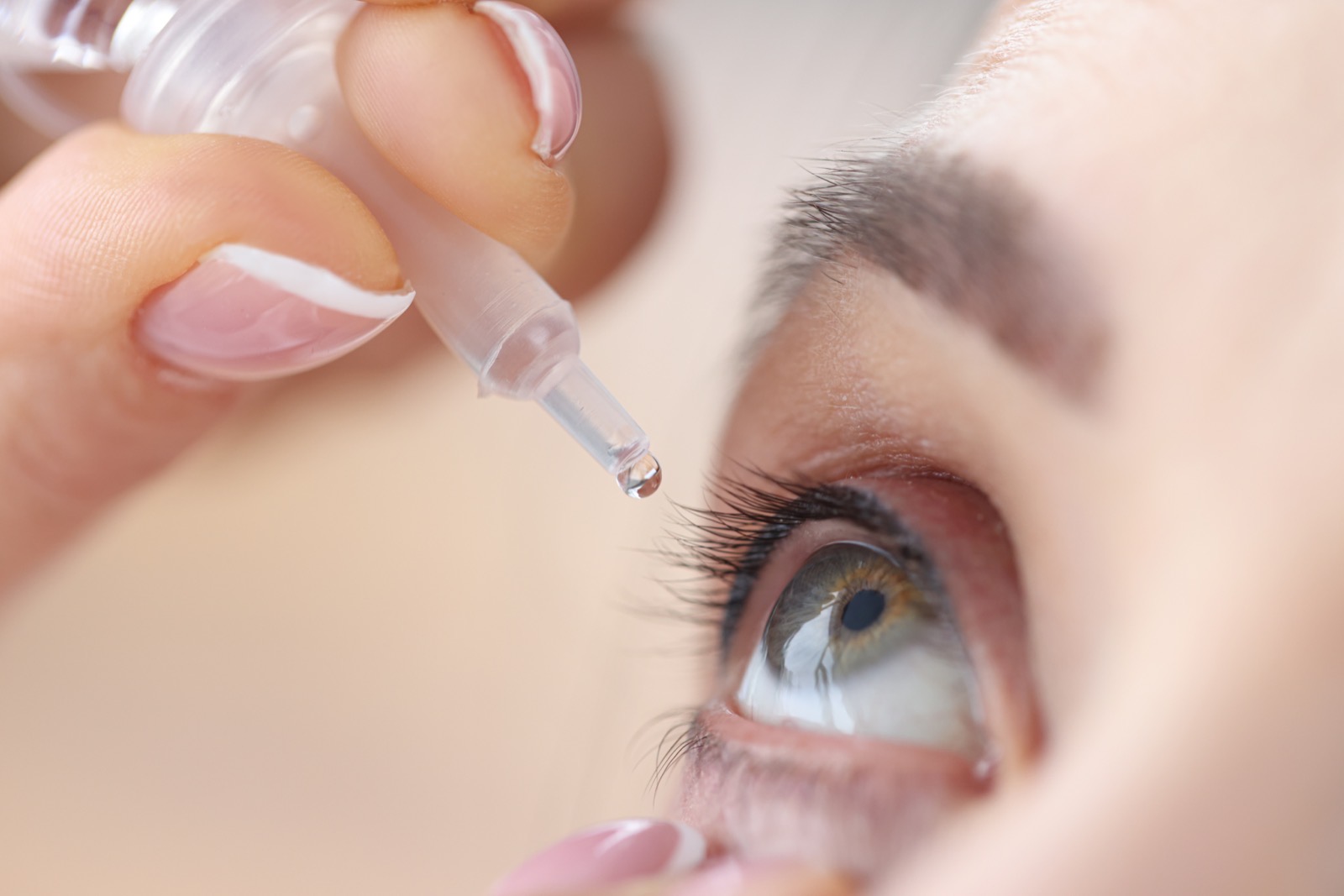
If your eyes burn, sting, feel gritty, look red, or water constantly — you’re not imagining it, and you’re not alone. Dry eye is one of the most common reasons patients come to see us, and it’s also one of the most misunderstood.
Here’s the part that surprises most people: “dry eye” doesn’t always mean you’re not making enough tears. In fact, the majority of dry eye — roughly 85% — is caused by a problem with the oil layer of your tears. That’s a condition called meibomian gland disease (MGD), and understanding the difference changes everything about how we treat it.
Your tear film isn’t just water. It has three layers that work together:
When everything is working, these layers keep your eye surface smooth, comfortable, and healthy. When something breaks down, you feel it.
Your meibomian glands line the edges of your upper and lower eyelids — you have about 25–30 in each lid. Their job is to produce a thin, clear oil that coats the surface of your tears and keeps them from evaporating between blinks.
When those glands get clogged, inflamed, or stop working properly, the oil they produce becomes thick and waxy — or they stop producing oil altogether. Without that protective oil layer, your tears evaporate too fast, and your eyes become dry, irritated, and inflamed. That’s MGD.
And here’s the frustrating part: your eyes might actually water more, not less. When the eye surface dries out, your body tries to compensate by flooding the eye with watery, reflex tears — the same kind you produce when you cry. Those tears don’t have the right oil balance to actually fix the problem, so you end up with eyes that are simultaneously dry and watery. It makes no sense until you understand the oil layer.
MGD is also the underlying cause of most recurring styes and chalazia. If you keep getting bumps on your eyelids, it’s usually because your meibomian glands are chronically clogged and inflamed — not because of bad luck. We cover styes and chalazia in detail on their own page, but know that treating the MGD often stops the cycle.

While MGD is the most common culprit, some patients do have reduced tear production (aqueous deficiency). This can be associated with:
Often, patients have a combination of both — reduced tear production and meibomian gland problems. That’s why a thorough evaluation matters before we start recommending treatment.
Not all dry eye is the same, so we don’t treat it all the same way. When you come in for a dry eye evaluation, we’re looking at the full picture:
This evaluation tells us whether you’re dealing with MGD, aqueous deficiency, or both — and it guides the treatment plan.
Treatment depends on what’s driving your dry eye and how severe it is. For many patients, it’s a combination of approaches — and we build the plan around what’s actually going on, not a one-size-fits-all protocol.
For mild dry eye, simple changes can make a real difference:
When over-the-counter approaches aren’t enough:
For moderate to severe MGD, in-office treatment can address the root cause in a way that drops and warm compresses can’t:
It depends on the cause. If your dry eye is triggered by a temporary situation — a new medication, a dry winter, or a period of heavy screen use — it may improve when the trigger resolves. But MGD and chronic dry eye are ongoing conditions that benefit from consistent management. The good news is that with the right treatment, most patients get significant relief.
Over-the-counter artificial tears help some patients, but if your problem is MGD, adding more water to your eye doesn’t fix an oil problem. That’s why the evaluation matters — once we know what type of dry eye you have, we can recommend treatments that actually target the cause.
Yes, if it’s severe and left untreated over time. Chronic dryness and inflammation can lead to corneal damage, scarring, and in rare cases, vision changes. This is another reason not to just tough it out — especially if your symptoms are persistent or getting worse.
Screen time doesn’t cause MGD or aqueous deficiency directly, but it makes existing dry eye significantly worse. When you’re focused on a screen, your blink rate drops by more than half, and the blinks you do make are often incomplete. That accelerates tear evaporation. If you work on a computer all day, your dry eye will almost always feel worse by evening.
They’re different conditions, but they often overlap and can make each other worse. Allergies cause itching, watering, and redness — and the antihistamines people take for allergies can reduce tear production. If you have both, we address them separately.
All of our doctors evaluate and treat dry eye. Whether you’re dealing with dryness for the first time or need a fresh look at what’s been going on, you’re in good hands.
Optometrist
Evaluation & medical management
Optometrist
Evaluation & medical management
Optometrist
Evaluation, medical management & IPL
Optometrist
Complex dry eye, medical management & IPL
Ophthalmologist
Complex dry eye, medical management & IPLIf your eyes are dry, red, gritty, burning, or watering — come in for an evaluation. New patients always welcome.
Schedule an Appointment